

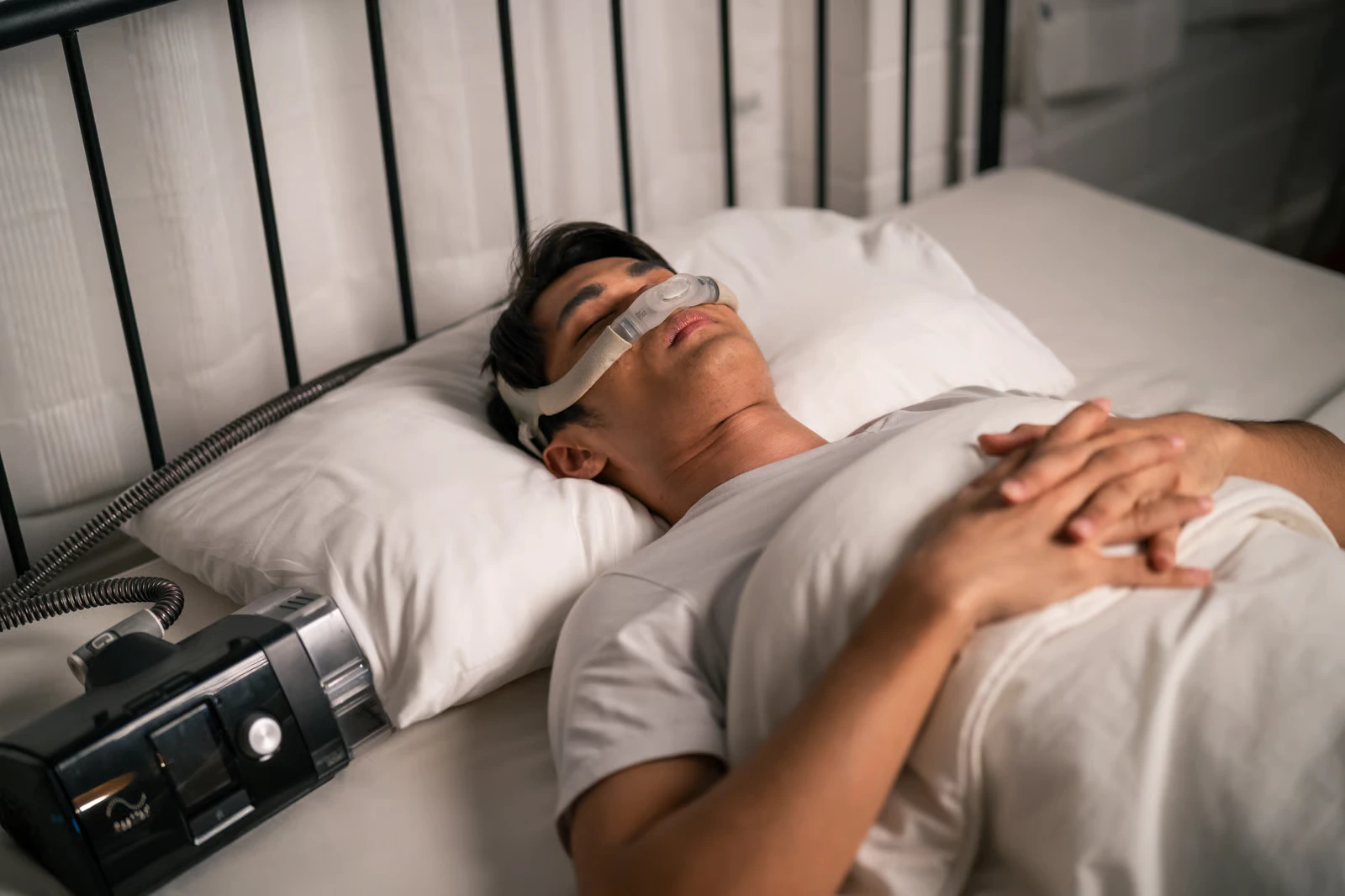
Sleep apnea can interrupt your breathing, disrupt your sleep, and leave you feeling tired during the day. Get personalized sleep apnea care in Newbury Park, with treatment options that may include custom oral appliances designed to help keep your airway open while you sleep.
Quick Answer: Sleep apnea is a sleep disorder that causes repeated interruptions in breathing while you sleep. At Channel Islands Family Dental Office in Newbury Park, the team can evaluate your symptoms and guide you toward appropriate treatment options, including oral devices and other therapies. Sleep apnea is confirmed through a sleep study, and treatment is determined in consultation with a physician.
Bilingual customer service, flexible insurance plans, and five locations that make it easy to stay on top of things.
Including our office in 1620 Newbury Rd Suite 5, Newbury Park, CA 91320

Common symptoms of sleep apnea include loud snoring, pauses in breathing during sleep, gasping, dry mouth, morning headaches, daytime sleepiness, difficulty concentrating, and irritability.
Channel Islands Family Dental Office in Newbury Park offers evaluation and guidance for sleep apnea treatment. Depending on the case, options described by the practice include oral devices and airway therapies.
Yes. Channel Islands Family Dental states that its dentists in Newbury Park can evaluate sleep apnea cases and help determine an appropriate treatment approach in consultation with a physician.
At Channel Islands Family Dental Office in Newbury Park, we specialize in sleep-apnea treatments tailored to your needs.
If you snore loudly or wake up feeling tired, even after a full night’s sleep, you could be experiencing sleep apnea.
Our experienced dentists in Newbury Park are ready to evaluate your case and help you find effective solutions.
Sleep apnea is a common sleep disorder characterized by constant interruptions in breathing throughout the sleep cycle. This condition occurs because the upper airways repeatedly collapse during the night, preventing normal breathing during sleep.
This disruption to your sleep cycle can seriously affect your energy, mental performance, and long-term health.
If you snore loudly and still feel exhausted after sleeping, you may be suffering from sleep apnea.
Many people seeking sleep apnea therapies in Newbury Park have had symptoms for years without realizing it, which makes early evaluation essential.
We work with the most common insurance plans in Ventura County, and if you don’t have insurance, we have an affordable option to get you started.



Sleep apnea is diagnosed through a sleep study. Once your results are reviewed, our Newbury Park dental team, together with a physician, will recommend the most appropriate treatment plan.
Sometimes, simple changes can improve symptoms:
If symptoms do not improve, or if your apnea is moderate to severe, other therapies may be necessary.
If you find CPAP uncomfortable, our Newbury Park dentists can fit you with a personalized oral appliance designed to maintain airway openness during sleep.
These include:
These reposition your lower jaw and tongue slightly forward so the airway remains open.
A specialized mouthpiece that holds the tongue in a forward position to keep the upper airway clear.
These devices are comfortable, portable, and effective for many patients with mild to moderate sleep apnea.
This is the most common and reliable treatment for moderate to severe obstructive sleep apnea. A CPAP machine delivers a continuous stream of air through a mask while you sleep, keeping your airway open and preventing apnea and snoring.
Some patients initially find CPAP uncomfortable, but with time, adjustments, and proper support, most adapt well and experience significant relief.
A more advanced therapy often used for central sleep apnea. This device:
According to the American Academy of Dental Sleep Medicine, surgery may be recommended when other therapies have not resolved sleep apnea symptoms.
Depending on the location and cause of the obstruction, the following procedures may be considered:
While loud snoring and noticeable pauses in breathing are classic signs, other symptoms include:
If you recognize several of these symptoms, it may be time to speak with a Newbury Park dentist who can provide a professional evaluation.

At Channel Islands Family Dental Office in Newbury Park, our trained dentists carefully evaluate each case to identify the exact cause of your airway obstruction.
We guide you through all available options, whether conservative therapy, oral appliances, or surgical recommendations, to help you restore healthy and restful sleep.
If you live in or near Newbury Park and are looking for trusted, personalized sleep apnea care, our team is here to help you breathe easier, sleep better, and wake up with renewed energy.
While you’re here for your sleep apnea, take the opportunity to address the rest of your dental health at the same office.
Sleep apnea is a sleep disorder characterized by repeated interruptions in breathing during sleep. These interruptions can affect the sleep cycle, energy, mental performance, and long-term health.
Sleep apnea is confirmed with a sleep study. After the examination, the dentists at Channel Islands Family Dental in Newbury Park consult with a physician to determine the most appropriate treatment.
The page describes three types: obstructive sleep apnea, central sleep apnea, and complex sleep apnea. Obstructive sleep apnea occurs when the upper airway becomes blocked, while central sleep apnea involves problems with the signals controlling breathing.
Channel Islands Family Dental describes oral devices that can be customized by a qualified dentist. These include mandibular repositioning devices that move the jaw and tongue forward and tongue-retaining devices that help keep the tongue forward.
CPAP, or continuous positive airway pressure, uses a mask to provide constant air pressure while you sleep. The pressure helps keep the airway open and prevent interruptions in breathing. The practice describes it as the most common treatment for moderate to severe sleep apnea.
Adaptive servoventilation, or ASV, is an advanced airway therapy that monitors breathing and automatically adjusts air pressure to help keep the airway open. The page states that it is more commonly used for central sleep apnea.
For mild cases, the page recommends lifestyle changes such as losing weight, quitting smoking, exercising regularly, treating allergies, and sleeping on your side instead of your back.
The page states that upper-airway surgery may be considered when other treatment options have not eliminated sleep apnea symptoms. The type of surgery depends on the location and cause of the airway obstruction.
Fill out the form or call us directly—we’ll confirm by phone or text message.
Fill out the form or call us directly—we’ll confirm by phone or text message.